Showing posts with label Carvell. Show all posts

Tuesday, September 4, 2018

Joseph John (Henry) Carvell. And a confusion of names for his lady, Sarah Jane


Joseph John (Henry) Carvell was my great-great uncle, older brother by a few years of great-grandad Samuel Henry Carvell. The (Henry) in his name is because on one documented occasion, and one only--the baptism of four of his children, all on one day--his name was recorded as John Henry. At all other times he was Joseph John, or simply Joseph. To avoid confusion with another brother, Henry, I will stick to Joseph John.

Joseph John Carvell was born in Walcote, Leicestershire, to parents Samuel Carvell (1816-1898) and Jane nee Brown (1824-1877), within Misterton parish in the rural west of the county, on 6th September, 1863. He was baptised there, privately, two weeks later, on 21st September. A private baptism might indicate that little Joseph John was sick, though the register says that it was the rector, and not a local nurse or midwife, who officiated. (Baptisms could be done by anyone and then later 'brought into the church', but this appears to have been a church baptism, just private.) If it was because Joseph John was sick, he happily survived.

Map indicating location of Tan House Farm
Bromsgrove District
Joseph John's father, Samuel Carvell, was an agricultural labourer, as were many people living in the village of Walcote at that time. By 1871, when Joseph John is seventeen years old, he is working as a footman, and as little brother great-grandad Samuel Henry Carvell is already working, aged 12, as a farmer's boy, it's likely that Joseph John has been working for several years already.

Then in 1881, while Samuel Henry is a soldier in the 6th Regiment and barracked at the Tower of London, Joseph John has travelled to Stoke Prior in Worcestershire, where he is working as a butler for the Mays family at Tan House Farm. At some point between April 1881 and about 1888, Joseph John returns to Leicestershire, becomes a gardener, and meets up with Sarah Jane... and that is where all the name confusion begins.

Sarah Jane first appears in the censuses as Sarah Jane Bennett, a two-year-old boarder in the home of William Hyde. The family consists of William aged 45, Sarah Hyde his wife, aged 35, William's sons James aged 13 and Tom aged 10, plus little Sarah Jane Bennett and an older Jane Bennett, aged 15, also a 'boarder'. The census doesn't indicate if Jane and Sarah Jane are sisters, but I think Jane is far too young to be Sarah Jane's mother. I can find no indication that the two Bennett girls are William Hyde's step-daughters... there is no Hyde-Bennett marriage to be found. Nor is little Sarah Jane's mother's name easy to identify: there is a Sarah Jane born to an Elizabeth Bennett, no father named, in January 1859, but no way to be 100% certain it's the 'right' Sarah Jane... nor why she and Jane Bennett are living with the Hydes. Sarah Jane Bennett--still called Bennett--is still living with the Hydes, on Benford Street in Leicester, in 1871. Aged 12, she is already working as a "fancy hand"--probably doing delicate hand-work in Leicester's hosiery industry.

In the summer of 1879, Sarah Jane gives birth to a baby girl, Mary Edith Bennett. No father named. (I'll have more to say about Mary Edith later... there is a whole set of stories there!)

But by the time that Sarah Jane marries a William Burdett on 7th March, 1881, she is using the name, Sarah Jane Hyde. Did William adopt her? Or was it simply easier to say to the vicar or parish clerk that Mr. Hyde was her father? It took a while for me to track down that marriage, even though I knew that at some point between the 1871 census, and the 1891 census when she is living in Evington, Leicester, and Joseph John Carvell is her "boarder", her name had changed to Burdett!

Marriage of Sarah Janee Bennett or Hyde to William Burdett
by kind permission of FindMyPast.com
In the 1891 census, Sarah Jane Burdett, still a "fancy" workier, now with two daughters, Mary Edith (now listed as Mary Edith Burdett), and Daisy Georgina Burdett (born 12 October 1890, and what a lovely name!) are living at 29 Leicester Street in Evington. Joseph John Carvell is their lodger, and he is working as a gardener. There is no sign of William Burdett, though the census says that Sarah Jane is a married woman--and that Joseph John is single.

1891 census entry for Sarah Jane nee Bennett and Joseph John Carvell
I can find no record of William Burdett's death, and nothing at all to say that Sarah Jane is a widow. There is no newspaper story of anything untoward happening to Mr. Burdett, such as imprisonment or disappearance or such: nothing. Just one news item, saying that a William Burdett of 16 Christow Street was fined 2 s. 6 d. for not sending his children to school regularly, dated 18 April, 1889, in the Leicester Daily Mercury... but no way of knowing if it is indeed regarding Sarah Jane's children, or even the same William Burdett. I suspect that the couple simply split up and carried on their lives as if the other no longer existed. (If you know anything to the contrary, please let me know!)

Baptisms of the Carvell Burdett children
by kind permission of FindMyPast.com
During the 1890's, and by the time of the 1901 census--when Sarah Jane's surname has become Carvell--there are more children born: Wallis Carvell Burdett (1891-1899), two Joseph Carvell Burdetts, the first of whom was born and died in 1894, the second who was born in 1897, and Percy Henry Carvell Burdett, born in 1898, died in 1899. All of these children's births are registered with Carvell as a middle name, Burdett as their surnames, indicating that the parents probably were not legally married. Wallis, the older Joseph, Percy and Daisy Georgina were all baptised on the same day, 4th December, 1898, in Belgrave, Leicester. The family were living at 90 Checketts Road: the road still exists, but that house does not. What prompted the mass baptism? Did William Burdett pass away, allowing Sarah Jane and Joseph John to do as they pleased? Or were the children sick--note that Percy Henry and Wallace would be dead within a year--leading the parents to want them to be baptised before meeting their God? I haven't a clue.

By the day of the 1911 census, the family is living in Anstey, Leicestershire: Joseph John is still a (domestic) gardener, Sarah Jane (simply 'Jane' on the census document) is still a Carvil (sp.) and still Joseph's wife; daughter Daisy Georgina and son Joseph are the only surviving children, both of whom are already working in the shoe trade, even Joseph junior, aged 14. Mary Edith married John Hendry in 1900 and has her own family to take care of. The census says that John Joseph and Sarah Jane have been married for 23 years, so since about 1888, but that was contradicted earlier by the 1891 census, which shows Joseph John as being single, albeit living in the same house as Sarah Jane Burdett. Most likely, 1888 is when their relationship began. The 1911 census also shows that there were five children born to the marriage, and only two surviving, which matches up with the loss of Wallace, Percy Henry and the younger Joseph... but doesn't take into account that Daisy Josephine might be from Sarah Jane's marriage to William Burdett. Intriguing...

Joseph Carvell the younger serves in the First World War as a lorry (truck) driver, and then in 1925, he emigrated to Australia, where he lived until his death, in Victoria, in 1966. Daisy Georgina... Burdett or Carvell? She married a William D Hooke in 1924 in Belgrave, Leicester, and had at least two daughters of her own, Josephine and Alma Georgina.

As for Joseph John, and Sarah Jane Bennett-Hyde-Burdett-Carvell, I think they lived happily ever after... because I haven't yet tracked down when they passed away!

I can see where I get my gardening genes from... several Carvell ancestors found their vocations as gardeners!


7 Mar 1881

Friday, July 27, 2018

A few Frosty tales. Leicester, Knighton, Countesthorpe, Rotherby. And a non-existent Alexander Frost, the hatter.

Frosts of Knighton and Countesthorpe with two Williams: which is which?

I have recently been going down a few Frost rabbit-holes and burrowing around... coming up in places like Countesthorpe and Ratby and Rotherby, and becoming confused in the process.

(Remember Sarah Frost, my great-great-grandmother? This is her family. Carvell--Bonnett--Frost.)

I had originally traced Sarah Frost's ancestors to her grandfather, William Frost, who was born in Knighton, Leicestershire in about 1776. His date of birth comes from the 1841 census, where the census-takers did not record the exact year of birth for the adults: the enumerator was supposed to round down to the nearest five years--but not all did. Or they rounded up. So there is a big margin of error. As he died before the next census in 1851, 1776 is just a mark in the sand.

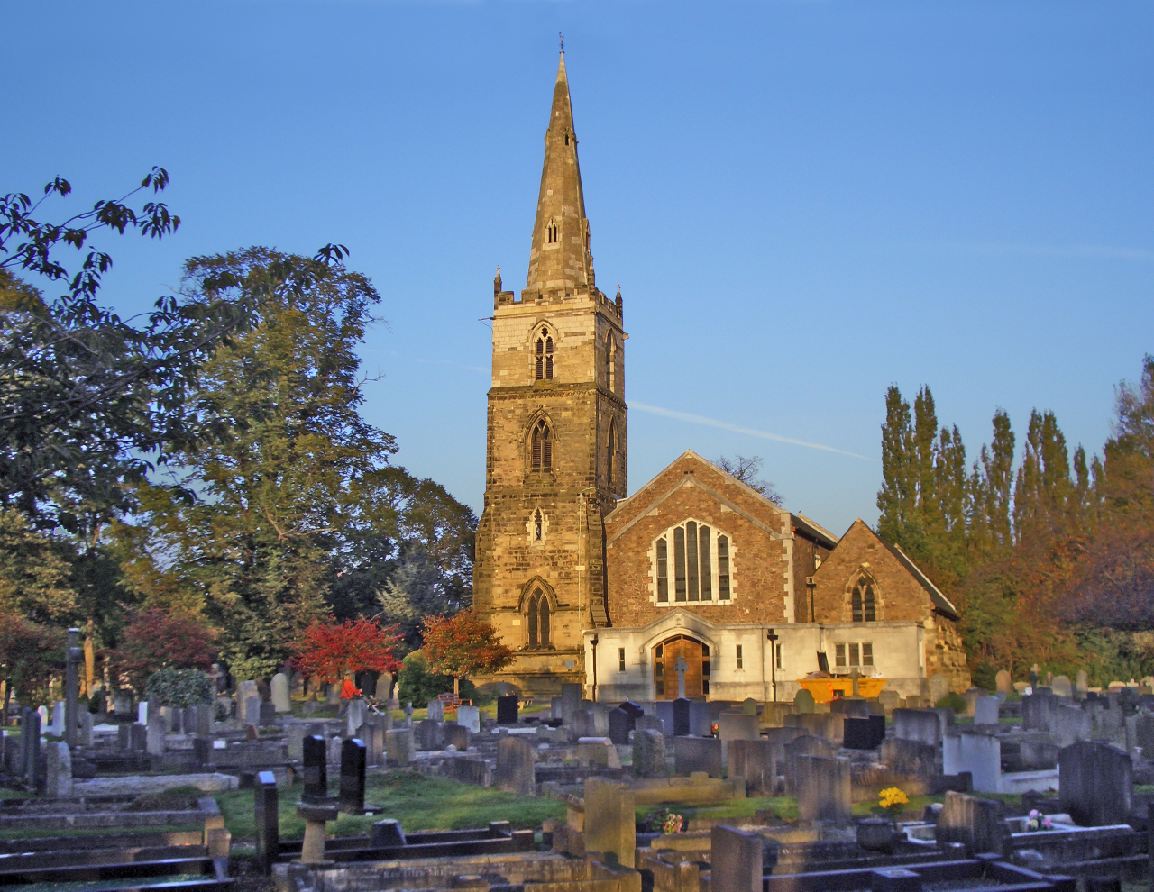
Knighton St Mary Magdalene,
Photo by Charvex from Wikimedia Commons
Knighton was then a village with a chapelry, St Mary Magdalene, which meant that it had parish records of its own but was part of the much larger parish of St Margaret's of Leicester. There were baptisms, marriages and burials recorded in Knighton, but some events--especially marriages--seem to have been carried out at St Margaret's church, or at least recorded there rather than in Knighton. Sarah's grandad William was from Knighton, according to his marriage, and my earlier research came up with a baptism for a William Frost, Knighton, in 1776: born to mother Mary Frost, no father named. A bit of a brick wall.

This research was done several years ago and involved lots of staring at microfiche copies of parish records on a squeaky machine in a dark room in a family history research centre in the USA.


Since then, more parish records have been digitised, and I recently found another William Frost, also baptised in Knighton, in 1773. Aarrgh. I cannot yet find any definitive evidence to say which of these two Williams--baptised 1773, or 1776--is the "right" William to be my great-great-great-great grandad. He could be either one. I cannot find a reliable death record or marriage record that would eliminate one or the other. So in my online tree, they are both marked with warning signs. Because I don't know which William married Mary Bryan. I just know that one of them did!

BUT: the second William Frost, baptised in 1773, his parents were John Frost (b. 1748 in Knighton) and Sarah nee Leavis or Loavis. And guess what? This John Frost was our unmarried mother Mary Frost's brother, older by a year. So... regardless of which William it is, the Frost family line goes back to William's grandfather, my sixth great-grandfather, Joseph Frost of Knighton, born about 1720. And from Joseph... the tree stretches way, way back to Countesthorpe, and eventually to a Richard Frost baptised there in 1615. That's as far as I have travelled in time so far... Countesthorpe has amazing records so if you have any ancestors there, you are in luck for research! (The only question I have in this line is around a John Frost who was baptised in Countesthorpe in 1678, but appears to have got on his bike or horse or cart and travelled to Leicester, married Elizabeth Newton in St Margaret's at the relatively late age of 32 in 1710, and then settled in Knighton. Was it a second marriage? Were there earlier children? Still to find out!)

While delving into these Frosts, I found many more Frosts, seemingly unrelated to "mine". That was the part that ended up in Rotherby, so far with no connection to either Knighton or Countesthorpe, as far back as another William Frost, who was buried in Rotherby in 1702--and where there are so many William Frosts that it is difficult to distinguish one generation and family from another. Along the way from the 1900's in Leicester to 1700 Rotherby by way of a few other places, I found some interesting and sad Frost stories:

Birth certificates for Alexander and Eliza Frost
- Two children, Eliza and Alexander Frost, who both listed their father as Alexander Frost, a hatter, on their marriage certificates. Though there never was an Alexander Frost. Their mother, unmarried, was Eliza Frost, born in 1829 in Leicester, daughter of Joseph Frost and Anne nee Taylor. I spent ages trying to find Alexander Frost, the father; an unusual name that should have been relatively easy to track down. But then I found the birth registrations. Eliza Nichols Frost, born 1862, and Alexander Nicholson Frost, born 1864, both to Eliza Frost, and neither with a father named. The registrar was the same for both: did he force the unwed mother to include the father's surname, or part of it? Or were the couple living together as common-law husband and wife when the babies were born? There was an Alexander Nickols, a hatter, born in Scotland but living close to Eliza Frost in a large, Leicester boarding house in 1861. But no trace of him ever after, and Eliza did not marry him--in 1871 she and her young son Alexander are together in the Union Workhouse on Sparkenhoe Street in Leicester, daughter Eliza is living with Eliza's older sister Ann and her husband, James Bland. Did the children know their father? Or was he just a fairy-tale Alexander Frost, pulled out of a hat like a rabbit to put on their official paperwork? We may never know...


Marriages of Alexander and of Eliza Frost, naming father Alexander
1861 census entry for Alexander Nickols in Leicester, a hatter from Scotland


- A connection between my paternal, and maternal, lines that I had no clue about. The Frosts are from my mother's side. There are Lords, on my father's side--a Ruth Lord married a Riley, her sister was Bathsheba who also married one of the Riley brothers, and they both lived in villages on the Syston side of Leicester. The Lord sisters were born in Countesthorpe. And one of their ancestors married a Mary Frost from my mother's ancestry... not part of the blood line, Mary was a second wife but--the connection is there, and I now find that I have a long-ago direct ancestor, also called Bathsheba... what a lovely name. Bathshebas on both sides of the tree. Maybe it was in the blood to fall in love with Thomas Hardy's writing. (More on the Lord story later.)

- A sad story of what were probably triplets, born to (probably) the William Frost who was buried in Rotherby in 1702. He -- or his son, or his father William -- married Elizabeth Sea, or Lea, of Market Bosworth, on 3 December, 1704, in the village of Barlestone, Leicestershire. The husband was living in Rotherby at the time of the marriage, and the family settled there, with three sons, Thomas, William and Samuel baptised in Rotherby in 1705, 1706 and 1708. Then comes the sad part: the records show three children baptised together on the same day, 16 January, 1710: a daughter, Ruth, and two more sons, Richard and Charles. Given the spacing of the older children and the marriage, it is most likely that these were triplets rather than a group of older (and possibly sick), unbaptised children being baptised together, though there is nothing in the parish records to indicate a multiple birth. But then tragedy strikes... little Richard was buried on 20th January. The mother, Elizabeth, was buried in Rotherby on 24th January, just two weeks after the babies were baptised. Baby Charles, on 29th January. Ruth survived into early February, buried on 5 February 1710. Within two weeks, William Frost had lost his wife and three children, leaving him a widower with three sons under the age of five. (I think it is this William Frost who remarries to Mary Bayley in 1716 and has more children with her.)

Sometimes the parish records will mention a multiple birth--I have seen "twin" next to a baptism record, sometimes with, sometimes without, the other twin's name. And once, a set of triplets, where the record showed the baptism of two children and also said that a third child had been stillborn. A vicar or clerk being respectful and helpful and kind. Early UK parish records only include the father's name, not the mother's. Occasionally the year, or even the exact date, of the birth itself is included with the baptism (but most often not). And then you have the very early records which simply say, John Smith baptised... and nothing else. No name of father, or mother, no age, no clue whatsoever. Could have been a newborn. Could have been a thirty-year-old who had just realised that they had never been baptised and wanted to do so before being allowed to marry. Or a ninety-year-old John Smith, preparing to meet his maker.

Family history is a treasure hunt, a mystery story, a forensic investigation, and an adventure. Be prepared for sorrow, surprise and intrigue. Even if it's down a rabbit hole that ends up nowhere near your own ancestors!

Friday, September 22, 2017

Did I just break through a brick wall? Elizabeth Durhead. And things come in twos.

Banns for the marriage of Samuel Carvell and Elizabeth Durhead
Elizabeth Durhead, my fourth great-grandmother on my maternal grandfather's side, has had me stuck--a "brick wall"--for almost as many years as I've been researching the tree. She married Samuel Carvell on 22nd April, 1776, in Churchover, Warwickshire, one of a group of villages that straddle the Warwickshire/Leicestershire border surrounding the market town of Lutterworth, and in the area where future generations of Carvells will live and work and grow their families. Churchover, Misterton, Kimcote, Walcote, Costerbach... until great-grandad Samuel Henry Carvell settled in the city, Leicester, after retiring from the army.

Elizabeth Durhead and Sam Carvell had at least eleven children, at least five of whom did not survive their first five years, sadly typical of families of that time. Agricultural labourers, poor, with children arriving one after the other until fertility ended, or the mother died, after which the father often remarried, quickly, for help with all the children.

My ancestor Samuel Carvell, son of Elizabeth's Sam, was the second child born to the couple to be named Samuel. There was a Samuel baptized on 25th April 1778, and then "my" great-great-great grandad Samuel who was baptized on 11th May, 1783. Both baptisms in Churchover, both to parents Samuel and Elizabeth Carvell. I cannot find a record of the first Samuel being buried... so either "my" Samuel was baptised twice and he was older than I think he is, or the first Samuel died and was buried elsewhere, or there were two Samuel and Elizabeth Carvell couples living in Churchover at the same time. That's not impossible; there was definitely a family patter of names for all the children, but I tend to believe that the first Samuel child did not survive.


Anyway... back to Elizabeth Durhead.

There is no record of any Elizabeth with the Durhead surname anywhere in the parish records, not in Warwickshire, nor Leicestershire. In fact, there is nobody, man, woman or child, with the surname Durhead, not anywhere I have searched: not in all of England or anywhere in the world of online records and indexes.(That's not to say that they didn't exist.)

I tried saying the name, Durhead, out loud, and writing it in different ways. I tried many variants on the spelling: Durrhead, Derhead, even Daffyd. I studied the photos of the parish register, squinting and trying to see if there was a different way of transcribing it. No... it still looked like Durhead.

But then... today... I think I might have found her. But... and there's always a but... I didn't find my one-and-only Elizabeth Durhead, but two!!!

There is an Elizabeth Durrad, a variant on the name that I hadn't previously thought of or seen, born in Kimcote in 1754, daughter of Sarah Durrad, a "natural child". That's such a nice way of describing an illegitimate baby whose father's name is not known (or not given). Durrad! Yes it sounds the same as Durhead! The age fits for marrying Samuel. But wait... there is another Elizabeth Durrad, also born in Kimcote, also a natural child, but whose mother's name is Mary Durrad; this Elizabeth was born in 1759.

So now we have two possibilities for a relationship that might be completely incorrect... but for now, I am going to go with Elizabeth the elder, baptized in 1754, as that would make her 22 at the time of her marriage to Samuel Carvell, while the younger Elizabeth would have been only 17. (And of course, there might have been an Elizabeth Durhead of Churchover, meaning that neither of these natural Elizabeths are the right one.

I won't stop looking, yet, but this does feel like a breakthrough! (It will now be interesting to see how quickly this link becomes propagated to other researchers' trees online, because so far everyone else was stuck at the same brick wall.)

Thursday, August 10, 2017

Dunkirk: the movie and the stories

The movie, Dunkirk, directed by Christopher Nolan, is in cinemas now... you may know Nolan from Batman, but... go see this movie. Go see it.

The movie doesn't attempt to portray the en-masse story of the hundreds of thousands of soldiers and wounded airmen, British and French, stranded on the beaches of Dunkirk, surrounded and bombarded and shot at by the enemy. Instead, it takes the stories of a few, and shows the bravery and terror, the determination and the fear, the pride and the suspicion, the might of the machine and the strength of numbers in the face of something impossible, through the experiences of those few people. You watch, and your heart and mind is multiplying by 300,000... the number of British who were rescued from the beaches by a flotilla of small boats, mostly manned by civilian volunteers. You watch, and you imagine the beaches and the thousands upon thousands being strafed by machine guns, bombed and blasted. You watch, and you see all the fine young airmen who risked their lives to protect others. And you wonder... why does war never end?

I left the cinema in tears, in the middle of the day, and my smartphone is telling me how much closer we are to the next one, with every presidential tweet.

Where does this movie review fit into the family history, you may ask.

Brian and Betty Carvell on their wedding day in 1943
My uncle Brian Carvell (1920-1980), my favourite uncle, was on that beach during the last days of May or early June, 1940. He was wounded, on a stretcher, 19 years old; a member of the RAF (Royal Air Force). I don't know what happened to him as an airman, but he ended up on the beach at the battle of Dunkerque, France. People were shooting at him and his fellows, with machine guns; guns on one side, waves on the other, nowhere else to go, until the little boats came from all the ports and harbours around the coast of England.

Uncle Brian was rescued; he came home to England, but to hospital, eventually to the hospital in Saffron Walden, Essex, England, not far south of Cambridge.

Saffron Walden General Hospital (now council offices):
photo by  Robert Edwards
under Creative Commons licensing  CC BY-SA 2.0,
Brian Carvell, like many others from the beaches of Dunkirk, was hospitalized because of shell-shock: what, today, we call PTSD (post-traumatic stress disorder), they still called "shell shock" during the Second World War. It was a term introduced during the First World War; at first, doctors thought it was something in the bombs--the shells--that were affecting the soldier's mental health. But no... it was the trauma, and it affects so many good people. (You'll see an example of this in the Dunkirk movie.)

In 1943, Uncle Brian married Betty (Elizabeth) Sell. I believe my Aunty Betty had been one of Brian's nurses at Saffron Walden: they married there, and their son Christopher was born in the town of Saffron Walden, in 1945. (I don't know for how much of these five years Brian Carvell was being treated in the hospital--the records are not available to me.) The trauma of the experience at Dunkirk stayed with him; he'd protect Aunty Betty, on the street, from the machine-gun fire of motorbikes and cars backfiring.

Later, the family lived in Brinklow, near Coventry and Rugby: Brian worked at Rolls Royce; he was a technical author. I remember their home there: walks through fields full of cows (my mum was scared of cows), of visits to my uncle's neighbour, who kept chickens; the smell of fuel from Brian's miniature steam engines, of staying, on my own, with Uncle Brian and Aunty Betty and playing a board game called Buckaneer which I loved but which I've never been able to track down. It was about pirates and treasure.

(In case you check the Carvell family records: Uncle Brian was named Bertie Willy Carvell. He officially changed his name to Brian as soon as he was old enough!)

My ninth year, we were between houses; my parents had sold the house on Albert Street in Syston, Leicestershire, England, and had not yet bought the bungalow on Brighton Avenue. My dad was working at Rearsby aerodrome, at Auster Aircraft, making the wooden insides for light aircraft. We were living in a wooden house owned by Auster Aircraft, on the edge of the newly-started, brand new "village" of East Goscote. I guess our home had once been a barracks. There were several families of Polish people living on our little lane, in the barracks housing too. Across the street, not demolished yet to make way for the new houses, were old military storage shelters, weed and grass-overgrown roads and paved areas, lots of big, square earthen banks to climb up and down--storage depots with the roofs removed--and masses of yellow-flowering gorse to hide in. The gorse had grown so old and big it that there were tunnels between the thorns. There were rabbits everywhere, and there was a fat fox in the centre of the cornfield behind our home when they harvested. How I loved that summer!

Like magic, on my birthday in October, Uncle Brian turned up at our little wooden house, just four days before my baby sister did. He didn't bring a birthday present of chocolate, or a doll, or anything silly like that. He brought me a big, heavy, old-fashioned Remington sit-up-and-beg typewriter, and a teach-yourself-to-type book, the sort that the typists at Rolls Royce used. That was the best birthday present ever. I learned to type. I worked as a technical author, too, for years.

Uncle Brian was the kindest, gentlest man. I can still hear his quiet voice and see his gentle eyes.

(I still miss you, Uncle Brian.)

To my regret, I didn't ask him about his experience at Dunkirk. I was too young. And then when I was old enough, I still didn't ask. He certainly didn't talk about it to me. Maybe that's OK. Maybe it was enough for him to live through it, to survive, and to be the best uncle a girl could have.

(Go see Dunkirk. It's not just a movie. It's not just a history lesson. It doesn't glorify war, nor does it make any political statement. It shows, very well that the people on the beach, every one of them, were real people, with families, just like you and me. If you don't know anyone who was there... remember my Uncle Brian. Don't be surprised if you cry.)

Brian Carvell, Betty nee Sell, two people I don't know.
The bridesmaids are Topsy on the left, and my mum, Bette, on the right.

Thursday, August 3, 2017

All the Samuel Carvells... and a brick wall (plus the Tower of London)

My maternal grandfather's Carvell ancestry
Sometimes, when researching family history, you hit a brick wall. There's no way around it, there's no magic door; there are no signposts pointing in another direction. This is where I'm at with my grandad Carvell's line: I've followed it as far as I can with the resources I have, and I'm stuck, with Samuel Carvell and Elizabeth Durhead (or Diehard, or Diehead, or whatever her name might have been), who married in the tiny village of Churchover, Warwickshire, in 1776, the year of the American revolutionary war, the year the USA declared itself independant of England, though I suppose that was pretty irrelvant to a family of farm labourers living in the middle of beautiful countryside in the English midlands.

My grandfather was Joseph Arthur Carvell, born in Markfield, Leicestershire, in 1886. His father, Samuel Henry Carvell, was born in Walcote, near Lutterworth, almost on the Leicestershire/Warwickshire border, in 1859, He was already working as a farmer's boy when he was 12, but in 1878, when he was about nineteen years old, he went to Warwick and enlisted with the 28th Infantry Brigade. In 1881 he held the rank of private... but he was stationed at the Tower of London! What an adventure that must have been for a young man from Walcote.

Map of the Tower of London. Image from Genmaps. From an engraving by Richard Blome,
 published 1755 by John Stow in A Survey of the Cities of London and Westminster
Not only did Samuel Henry hang out at the Tower, with the Ravens... he went to India, too, for eighteen months service.

Samuel Henry Carvell's military history. Completed nearly ten years' service, including the reserves.
Samuel Henry Carvell didn't return to life on the farm, after his years in the military; he settled in Leicester, married Rebecca Arnold in 1885, and together they grew a family of six children, with my grandad, or as I called him, my Grandgump, Joseph Arthur, being the eldest. Grandgump was a lovely and kind man and I have many happy memories of him; going to the Leicester market and always finding his favourite cherries, Sunday afternoon teatime with Grandgump and his second wife, Lala (so called because I couldn't say "Clara" when I was little, and it stuck);  me, cycling through the fields from Syston to Scraptoft to visit him in his later years, finding him cooking a dinner of tripe in milk... he loved it, I didn't. There will be more stories to come about Joseph Arthur! But first, back to all the Samuels...

An outing for Samuel Henry Carvell, a few months before the end of his life.
Leicester Daily Mercury, 20 July 1950, reproduced by kind permission of findmypast.com
Image copyright Trinity Mirror
Joseph Arthur's dad was a Samuel, Samuel Henry Carvell. And Samuel Henry's dad was Samuel Carvell, too! And... his father before him! And yes: his father too. The tree goes: Joseph Arthur, Samuel Henry, Samuel, Samuel, Samuel. And I cannot find out if it continues with more Samuels beyond. Who knows? There might be Samuel Carvells in the Domesday Book! Maybe I should start there, and work forward in time: try another angle.

Each of the generations of Samuel Carvells had several children, who also had several children. Each of the Carvell families tended to use the same set of names: Samuel, John, Joseph, Mary, Ann, Thomas, Sarah. (I had an uncle Sam Carvell, and an uncle Joe Carvell too--it carried on.) This means that it can be extra tricky matching up all the "right" children with the "right" families, when you piece the tree-puzzle together. All errors are my own...

Prior to a general migration to Leicester, around the same time as Samuel Henry's move to the city, the families lived in cluster of farming communities: Misterton, Walcote in Leicestershire, Churchover in Warwickshire, with their wives from neighbouring villages; Costerbach, Claybrooke Magna, Kimcote, Bitteswell. All centered around the market town of Lutterworth, which of course is where all the farming community would meet up.

But my research has faltered, stuck at Samuel and Elizabeth who married in Churchover in 1776. I have searched the parish records online, reading the digital copy of the hand-written book... but no birth records for either Samuel or Elizabeth, though they were both "of this parish" when married. Which only means they had both lived there during the times that the Banns were read.(It wasn't a huge deal to read the parish records for the relevant years; the population of Churchover was only about 300 in its heyday!)


I understand that the Churchover parish records for the years between 1670 and 1721 went missing. That would explain why early records of a Churchover Carvell family cannot be found--if they lived there--but it doesn't explain no Carvells born or died in Churchover between 1721 and the marriage in 1776. There must be something that I'm missing.

There is another community of Carvells in nearby Hillmorton, Warwickshire, but I have not yet been able to make the connection. Same goes for a lot of Carvells in Everdon, Northamptonshire; not so very far away: a couple of hours by horse and cart. But... so far, no connection.

As for Elizabeth, the bride in 1776: it looks like her name is Durhead in the register, but that's what the person who wrote it down heard. Elizabeth signed with her mark; she did not write her name. I cannot find anyone else, anywhere, with that surname! It doesn't exist! I've tried imagining else it might be... either by staring at the signature for ages, wondering if the 'u' is an i, or if the 'r' is an n... also wondering about the sound of the name: was it Dread spoken slowly? Or Dafyd voiced very shyly? So far, I haven't found her. If you have... please let me know. Because I've been knocking up against this brick wall for well over ten years now!

But this is the fun of the puzzle!

I should probably just find all the Samuel Carvells born before 1776, and work out which one of them was the next one in my chain of Sams. That might do it!

(The Carvell name has been spelled in many ways across the years, and by different census takers and registrars. Carvell, Carvel, Carvill, Carvile: all part of the same family.)


Friday, July 14, 2017

Sarah Frost (1830-1885)

Sarah Frost, her parents and children, Denman St, Leicester, 1851
I wish I could travel back in time, and talk to this lady, my great-great grandmother on my mother's side. She experienced so much of life's hardships during her 55 years. And yet she saw some of the country, worked as a seamstress, raised a number of children. I wonder what she looked like?

Sarah Frost was born in Leicester in June, 1830, to John Frost and Elizabeth nee Kilby. They lived on Eaton Street, which was part-way along Wharf Street. John Frost was a framework knitter (click here to see a video about framework knitting, which was the trade of many people in the East Midlands, either in factories, or in their homes). Sarah had a brother, William, two years her elder, and in 1832, a sister arrived--Elizabeth. (I have been unable to find Elizabeth, with any certainty, after her birth. There are several Elizabeth Frosts in Leicester, including one who is working as a domestic servant, aged 10, in the 1841 census, but I suspect that Sarah's sister did not survive infancy, although I have been unable to find any record of her death or burial. Whatever happened, Elizabeth was not present in the Frost household in 1841.)

In 1841, the Frost family consisted of father John, mother Elizabeth, son William and daughter Sarah. They lived on Mill Street, Leicester, about a mile's walk from their previous home. By 1851, they were living at 12, Denham Street in Leicester, another street that no longer exists. It was the next left turn after Manitoba Street, going north on Christow Street, back in the area of Wharf Street. Important to remember: this was a time when the "slum" housing, the streets of terraces in Leicester, were just being built. The homes were all new! In 1851, the household contained Sarah, her parents, a new "brother" Richard, and Sarah's baby, William Frost, aged eleven months. (Richard Frost is listed as the son of John and Elizabeth: he was Sarah's son, born when she was seventeen years old. He later takes the name of Sarah's husband, Bonnett, but returns to Frost by the time of his marriage to Eliza Worthy, where his father's name is listed as "Fr N K", father not know.) So far, I have not found documentation of his birth or baptism--unlike the baby, William Frost, where there is no doubt at all that he is Sarah's son.

Sarah gave birth to William on 17 April, 1850, in the Union Workhouse, Leicester. There is no father listed on the birth certificate, just an empty space where his name should be. The workhouse was on Sparkenhoe Street, to the north of Conduit Street, and at the time of William's birth was undergoing a major rebuild. Many workhouses had infirmaries for the poor: you didn't have to be an inmate, and as Sarah was back home with her parents and baby shortly afterward, it's likely that she went to the workhouse infirmary to give birth and then returned home to her parents in Denham Street. That's where she was on 30 March 1851... but on 31st August of the same year, she is in Grantham, Lincolnshire, marrying Emmanuel Bonnett.

I'd like to think that Emmanuel was William's natural father, and that he'd been sent to Grantham to pursue his work as a blacksmith: in the 1851 census, while Sarah is at home with her parents, Emmanuel is living as a lodger with a baker's family in Grantham, and working as a striker: the person who hits the metal with a big hammer while the blacksmith heats and shapes the item they are working on. In 1841, Emmanual had been living with his father, blacksmith John Bonnett North, on Thames Street in Leicester, about half a mile from Sarah's home. Did they make the baby, and was Emmanuel then sent away to Grantham? Did he take advantage of her, then leave, and did she follow? Or was the baby from another father? Without that time machine, we'll never know.

Although railways were becoming established in England in the 1850s, it's unlikely that Sarah travelled to Grantham by train, though it would have been a huge adventure, with steam engines and the brand-new experience. (The Belgrave train station didn't open until 1882, and in the early 1850s, trains in the Midlands were mostly used for transporting coal.) If you compare the speed of travel by horse and cart to a bicycle, it would have taken about three hours to go from Leicester to Grantham, a distance of about 37 miles, passing through some beautiful, rural countryside, maybe travelling along the hilltops to Melton Mowbray, or along the valley through Frisby and Asfordby and Eastwell and then the Vale of Belvoir, passing close to Belvoir Castle. However Sarah, and Emmanuel before her, travelled to Grantham, they were married at the parish church, Grantham, by banns--so a wedding announced publicly for several weeks. Both were residents of Grantham at the time of the marriage, so Sarah must have arrived there a while before. Emmanuel signs with his signature: Sarah, with her mark X.

Marriage of Sarah Frost and Emmanuel Bonnett, Grantham 1851
Sarah and Emmanuel Bonnett's son John was born in Westgate, Grantham, on 28th May,1852, exactly nine months after the marriage. By the time of the birth of son George on 24th May, 1854, the family are living at Cattle Street, Aston, in Warwickshire, where metalwork was much in demand. Sadly, George did not live to be a year old, but died in February 1855.

Sons Henry (1855) and Thomas (1862), and daughter Elizabeth (1860) were all born in Aston, Warwickshire. Thomas: another child who did not survive his first year. Infant mortality was so much higher then. So much sorrow... and mothers who had no choice but to continue producing children, year after year, until they either ran out of time, or could survive no longer.

By 1871, the family had returned to Leicester, living at 192 Birstall Street. Emmanual had completed his blacksmiths' apprenticeship by 1860, and was a journeyman--well on the way to becoming a Master Blacksmith. (Birstall Street ran parallel to Syston Street, which is where Sarah and Emmanuel's granddaughter, Florence Bonnett, would eventually live with her husband, Joseph Arthur Carvell, several decades later.)

Part of Birstall Street prior to demolition, 1964. Copyright Dennis Calow, shared under Creative Commons licensing
Sarah was widowed at the age of 48, when Emmanuel passed away in Leicester in 1878. By 1881 she is living in the home of her son John, at 221 Birstall Street--just across the road from her old home. She was working as a seamstress, a trade she continued through her lifetime. Never believe that women were creatures of leisure!!! She outlived her son Richard Frost--he died in 1882, aged only 35.

Sarah died on 28 September, 1885, at 138 Upper Brunswick Street, Leicester, probably the home of her daughter, Elizabeth, whose husband William Cawthorne witnessed the death certificate and who was present when Sarah passed away. She was buried on 28th September in Welford Road Cemetary, most likely in an unmarked grave in the company of several other people. The cemetery has 10,000 headstones, but 35,000 graves, so there's a lot of sharing going on (and you can still be buried there if you are willing to share your final bed with another!)

I still have a lot of questions about Sarah. Who was Richard's father? And William's? Where was Richard born? Was she treated well in the workhouse--was it a good place to go, to be cared for while giving birth, or was it a place to hide away from the shame of illegitimacy? Did she follow Emmanuel to Grantham, or did he bring her there? Were they in love? How hard was it to work as a seamstress while taking care of the family of a blacksmith, in an environment where children went to work, so young? (Her son, William, was working in 1861, aged 10, as a horse-hair carder, brushing horse hair to prepare it for use in upholstery; the same year, Richard, aged 14, was a spoon blank roller, working with sheet metal for use as spoons.)

And most of all... what stories would you tell your great-great-great grandchildren, Sarah Bonnett nee Frost? I wish I had known you. I think you were a fine, strong woman.

My direct ancestors

My direct ancestors: lots of stories to tell!

Thursday, July 13, 2017

Tracing the family tree; who, what, how, and why?

When I first started seriously researching my family tree, it was many years ago, before FamilySearch.org, before Ancestry.com, way before FindMyPast.co.uk. I lived in France, and all my family, and family history, was in England. I wrote letters and put them into paper envelopes with stamps on, and trusted them to the postal services. I tried to gather information from aunts and uncles, and I engaged the services of a nice gentleman in England who would nip off to the Registry Office to track down and purchase birth, marriage and death certificates.

As the internet started to grow, I found people through LISTSERVS and online forums who were chasing their own roots. When I moved to the USA, I discovered the amazing microfiche libraries maintained and shared by the Mormon church through their Family History Centers, and spent many a long our staring into a reader in a darkened room, trying to decipher handwriting on deteriorated paper which had been photographed in less-than optimum conditions.

Over time, the online repositories and search engines have blossomed into a wonderful store of knowledge. TV programs promote the myth that it's easy to trace your way back to a King or Queen. And DNA testing connects you with people whom share genes from a common ancestor, maybe five or six or more generations ago. My own DNA shows 83% "Great Britain" and most of the rest Scandinavian... so there's probably a Viking or two in there way back, but little or no French, Gypsy or Irish in the mix... much to the opposite of the stories about the Bonnetts!

One of the triggers to starting my research was the desire to find out more about my mother's maternal ancestry. As the youngest child of a large family, whose mother passed away just days after she was born, she knew very little about her mother's family--the Bonnetts--other than family rumours. The Bonnets' proved to be the most difficult of my grandparents' ancestry to trace, and yet one of the most fascinating. You'll see that name again, along with Toon, Carvell, Mountney, Riley, and many more. The Hughes family--the family of my daughters' father--is another fascinating branch, with many stories to tell.

While my "tree" is public on Ancestry.com, under the username alisontoontree201009, this website will share the stories of some of the family, and some of my experience and learnings while researching.

I encourage everyone to find out more about their ancestry. Our forefathers have shaped us into who we are, for better and for worse. If you know where you've come from, you have a better chance of knowing where you're going.

I go from researching families with ten or fifteen children, living in small homes, starting work at 12 years old or worse, working in factories or as domestic servants or farmhands or down in the dark of a mine, to my other guilty secret--House Hunters on HGTV--and see spoiled people refusing a house because each child doesn't have their own bathroom... The family research helps keep me sane in this consume-all world.

What would my great-grandmother say to my kitchen and laundry room? All the bedrooms? All this space for so few people? Would she complain that she doesn't have two walk-in closets and a personal dressing room? Somehow, I don't think so.

It's all relative!!!